Engineering Integrity Across Complex Systems
Independent advisory across integration risk, lifecycle performance, and operational availability in complex asset environments.
Engineering integrity is preserved through disciplined systems thinking.
Complex assets rarely degrade within neat organisational boundaries. Availability is shaped by interface decisions, sustainment assumptions, operating context, and the quality of engineering judgment available to decision makers.
Systems Integration Governance
Control the interfaces where software, hardware, contracts, assurance evidence, and operating procedures create compounded delivery risk.
Read capability 02Operational Availability Strategy
Translate operating demand, failure modes, maintainability, and support concepts into decisions that protect real-world availability.
Read capability 03Lifecycle Performance Advisory
Examine sustainment, obsolescence, asset integrity, and whole-of-life tradeoffs before they become operational constraints.
Read capabilityA concise view of Aerion's advisory capability.
Download the capability statement for a structured overview of Aerion's lifecycle, integration, availability, sustainment intelligence, and engineering governance advisory areas.
Engineering Notes
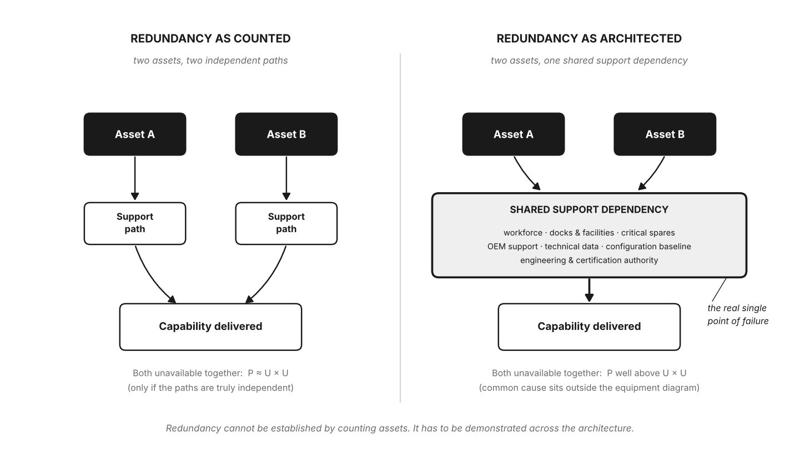
Two Assets Do Not Create Redundancy When They Share the Same Support Failure
A capability built around two major assets is often assumed to be redundant. But redundancy at the level of hardware does not guarantee independence at the level of capability. When two assets depend on the same workforce, facilities, spares, technical authority and support arrangements, that shared dependency can become the real single point of failure. Redundancy has to be demonstrated across the architecture, not inferred from the number of assets.

When Availability Outcomes Diverge from Engineering Confidence
A system can satisfy its reliability requirements, pass formal engineering reviews and still struggle to achieve the availability expected in service. The problem is not always the RAM model. Often, the assumptions and architectural decisions surrounding it deserve closer examination.
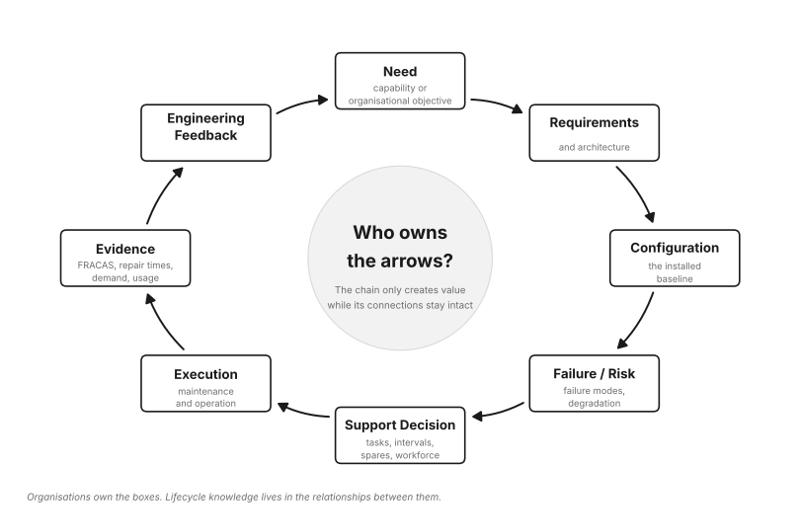
Two Standards, Same Gap
DEF(AUST) 5691/5692 and ISO 55001/55002 come from different environments, use different language and govern different organisational contexts. Yet both depend on the same fundamental idea: lifecycle decisions should stay connected to the evidence, assumptions and risks that justified them. The hard part is keeping those connections intact as the asset changes.
Discuss an Operational System.
Bring the asset context, delivery constraints, sustainment question, or integration risk that needs independent engineering judgement.